Photography has always been a common thing for me, especially in today’s information age, people no longer need professional and clumsy photographic equipment, and almost everyone has a mobile phone with a photographic function. Recording life with photos has become a habit. But it also makes people stop focusing on photography as they used to. People rarely think about the meaning of photography.
This week’s reading is about photography, but it wasn’t what I expected. At first, I thought I could learn how to take photos, how to capture them, and how to frame them. As a contemporary French master of thought, author Roland Barthes refers to photography as the highest state of thinking philosophy. There are two keywords STUDIUM and PUNCHTUM in his article, they are both Latin. As far as I know, STUDIUM has the meaning of concentration and fluency, referring to the surface features of photos that can quickly attract people. PUNCHTUM has stabbing, detail, and eye-catching meaning, which refers to the strong sensation produced by the viewer of the photo in the stimulation of various details of the photo, which in turn leads to a wider imagination. Roland Barthes believes that some photos are impeccable, smooth and perfect, but cannot be called good photos. It just makes people “like” and belongs to STUDIUM. Only photos that contain PUNCHTUM elements are good photos. There must be some details that can make the eyes stay, can “pierce” the eyes, and the eyes should “hang” to cause the audience to think, such a photo is the real soul. Because of Barthes’s philosophical ideas, these readings are often obscure. In some places, it is necessary to check it several times before you can roughly guess the meaning behind the word. But overall, after reading these articles, my understanding of photography has become deeper.
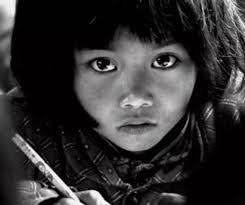
Denotation: A girl with a dirty face writing with a pencil/Big eyes with tears
Connotation: This photo has a background, at which time China started to implement the “Hope Project”, which aims to establish funds for children in poor areas so that they can have the opportunity to go to school./The character’s eyes with tears expressed a desire and firmness
reference
Barthes, R. (1981). Camera Lucida: Thinking about photography. Macmillan.
 Media & Cultural Studies blog